

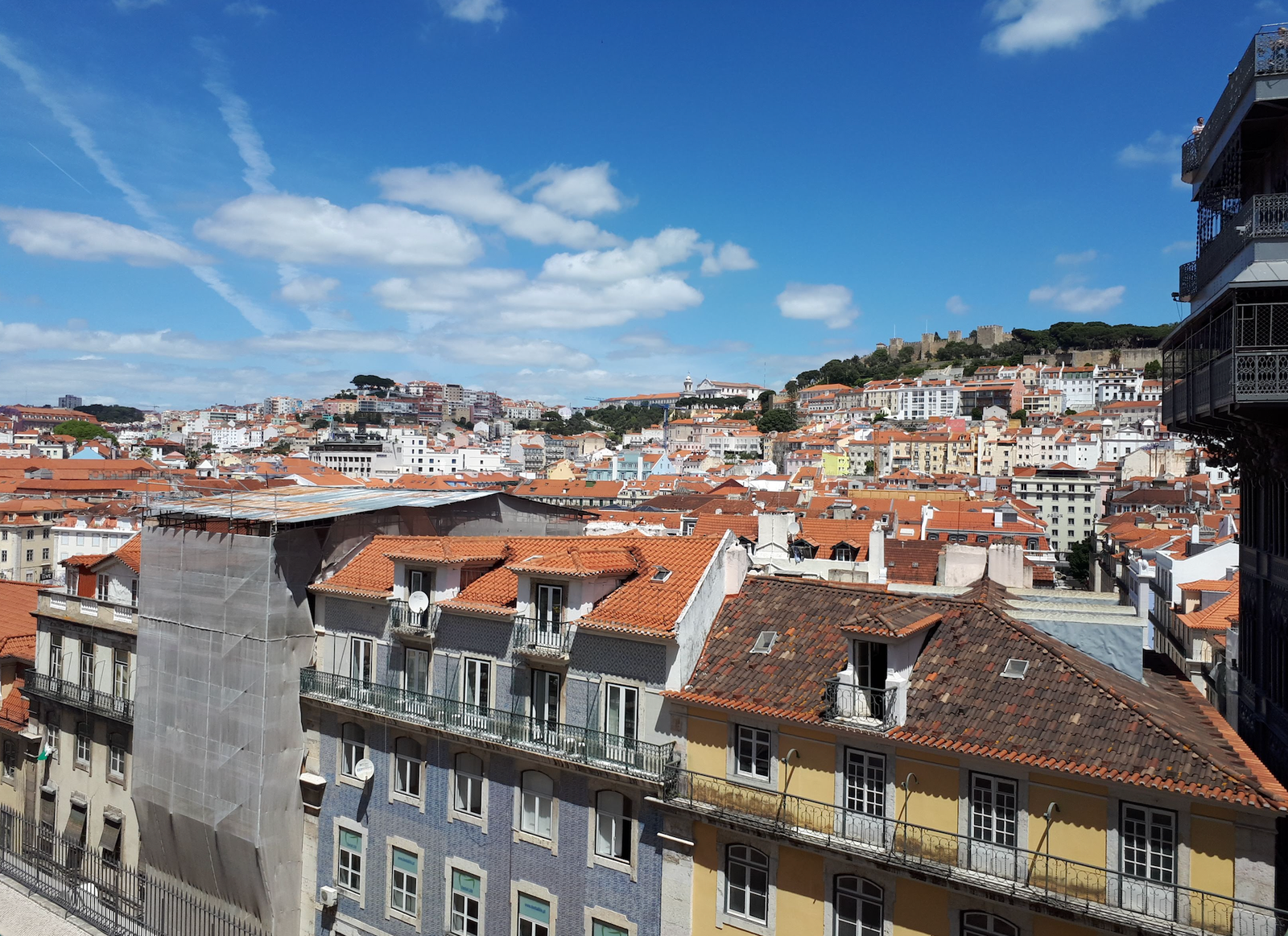
Portugal has become one of Europe’s most popular destinations for expats — and it’s easy to see why.
Think Atlantic beaches, beautiful cities, relatively mild weather, good food, café culture and a slower pace of life. For many people, moving to Portugal can feel like stepping away from the rush of everyday life and into something a little more relaxed.
But what is life in Portugal really like once the holiday is over?
Living somewhere is very different from visiting. Finding a home, dealing with paperwork, learning the language, navigating healthcare and building a social life can reveal a very different side of the country.
So, is Portugal really a good place to live?
I spoke to two sets of expats who have made Portugal their home to find out. Denison Smith, an American author living in the Alentejo, offers a fascinating perspective on life outside the usual expat hotspots. Kaylie and Josh from Expats Everywhere have lived around the world and now live in Porto with their daughter.
Their experiences highlight something important: there isn’t one single version of expat life in Portugal.
Where you live, what you expect and how willing you are to adapt can make a huge difference.
The pros of life in Portugal
1. A slower pace of life
Perhaps the biggest attraction of life in Portugal is the pace.
Compared with the United States, and even with countries such as Spain, South Korea and Singapore, Kaylie and Josh describe Portugal as noticeably slower.
“The pace of life here is much slower than really anywhere we’ve lived.”
That slower pace can take some getting used to — particularly if you’re accustomed to efficiency, instant responses and getting things done immediately.
But once you adjust, it can also become one of the things you love most about living in Portugal.
Denison experienced exactly this shift after moving from New Mexico. For him, the slower pace isn’t simply an inconvenience. It’s part of what makes the country appealing.
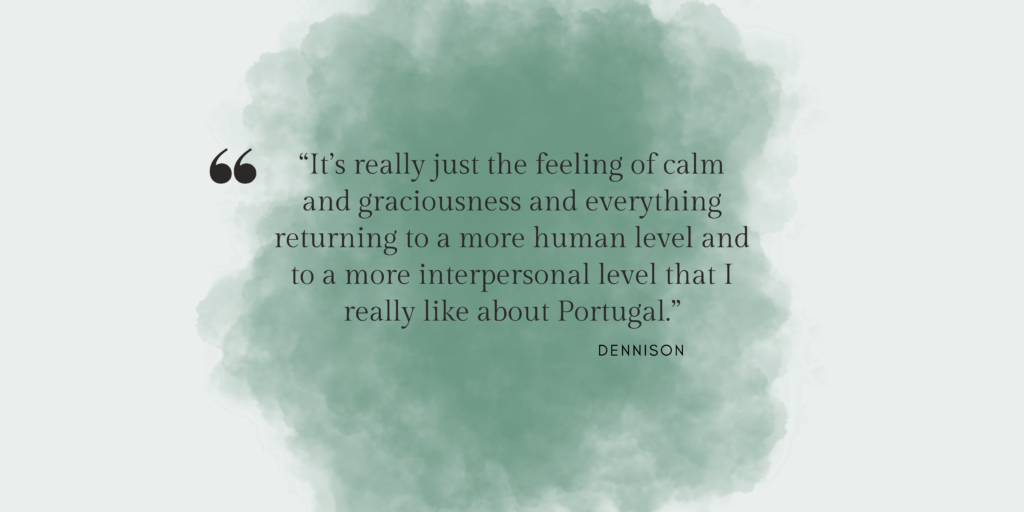
That may be one of the biggest lifestyle differences for expats in Portugal: life can feel less transactional and more personal.
2. Portuguese people are warm and sociable
Portugal’s slower lifestyle goes hand in hand with a strong social culture.
Denison describes a simple interaction that says a lot about everyday life:
“You wouldn’t dream of walking by somebody without saying, good morning. Right. How are you doing? All well.”
Kaylie and Josh noticed the same thing.
They recommend going to your local café regularly, getting to know the owner and becoming a familiar face. They also point out that Portuguese people tend to be very chatty.
And if you have a dog or children, even better.
“People love talking to people.”
For an expat, these everyday interactions can be surprisingly important. Moving abroad isn’t just about finding an apartment and getting a residence permit. It’s about gradually developing a sense that you actually live there.
3. Café culture is a real part of everyday life
If you love sitting outside with a coffee, watching people go by and catching up with friends, Portugal may suit you very well.
Kaylie specifically missed European café culture while living in Asia and was excited to return to it in Portugal.
“I did miss that about being in Spain, just sitting outside on a great day, having a coffee or a glass of wine, chatting with friends, watching people go by.”
This is one of those things that can make life in Portugal feel very different from life in a large, fast-paced city elsewhere.
Cafés aren’t necessarily places where you grab a takeaway coffee and rush back to work. They can be part of the rhythm of the day.
And Kaylie and Josh have a particularly good expat tip: find a local café and become a regular.
“Daily go to a cafe and just like hang out for a bit. Soak it in. Get to know the regulars.”
That’s not just a lifestyle recommendation. It’s also a way to integrate.
4. Beautiful landscapes — and more variety than you might expect
Portugal is often marketed through its beaches and dramatic Atlantic coastline. And yes, the coastline is a major attraction.
But Portugal is much more varied than Lisbon, Porto and the Algarve.
Denison deliberately chose the Alentejo because he wanted to recreate something of the landscape he loved in New Mexico.
“It had to be the Alentejo.”
He describes the region as beautiful, wild and relatively off the beaten track.
His experience is a useful reminder for future expats: don’t automatically assume you need to live in Lisbon, Porto or the Algarve.
Portugal offers very different lifestyles depending on where you settle:
- Lisbon – urban, international and highly connected
- Porto – city life with a strong local identity and slightly different pace
- Algarve – beaches, warmer weather and a large international community
- Alentejo – rural, spacious and quieter
- Northern Portugal – greener landscapes, cooler weather and strong local traditions
- Central Portugal – smaller towns, nature and a more rural lifestyle
The right place depends on what you’re actually looking for.
As Kaylie puts it, asking “Where should I live?” isn’t a simple question.
Do you want the beach? A city? Space? Warm weather? A car-free lifestyle? A large expat community?
Your ideal Portugal may not be someone else’s.
5. Food, wine and an enjoyable everyday lifestyle
It wouldn’t be a Portugal article without mentioning the food.
Fresh fish, seafood, pastries, wine, cheese, local produce and regional specialities are an important part of everyday life.
Denison puts it rather simply:
“The food is wonderful and the wine is great and costs almost nothing.”
Of course, “cheap” is relative, and Portugal isn’t necessarily the bargain it was a decade ago. Housing costs in particular have risen substantially.
Still, food and everyday pleasures remain an important part of the country’s appeal.
And for Kaylie, living in Porto means enjoying very local food — including the famous northern Portuguese francesinha.
6. Healthcare is another attraction
Healthcare is often an important consideration for people considering a move abroad, particularly retirees and families.
Portugal has a public healthcare system alongside private healthcare. According to the OECD’s 2025 data, Portugal provides coverage for a core set of health services to the entire population, while 2.4% of people reported unmet healthcare needs, below the OECD average of 3.4%.
That doesn’t mean healthcare is perfect. Waiting times and access can vary, and many expats choose private healthcare for faster appointments.
But healthcare remains one of the factors that makes Portugal attractive to people looking for a European base.
7. Portugal can offer a strong quality of life
Ultimately, many people aren’t moving to Portugal because they want to maximise their salary.
They’re moving because they want a different quality of life.
More time outdoors. More social interaction. A slower rhythm. Access to nature. Café culture. Good food. The possibility of living near the ocean.
For Denison, it comes down to something even deeper: a feeling of returning to a more human scale.
And for Kaylie and Josh, it’s about having built a lifestyle that works for their family after years of living around the world.
The cons of life in Portugal
Of course, Portugal isn’t paradise.
And if you’re considering becoming an expat in Portugal, these are the things you need to think about before you move.
1. Bureaucracy can be incredibly frustrating
This is probably the biggest recurring warning from expats.
Portugal’s slower pace can be charming — until you need something done.
Denison is particularly blunt about it:
“Portugal buries itself in bureaucracy.”
He describes government processes as slow, with things taking even longer in rural areas.
Kaylie and Josh say the same thing in a slightly different way:
This is an important expat tip: don’t build your life around the assumption that everything will happen according to the timeline you are used to.
Bring patience.
And then bring a little more.

Portugal’s immigration system has also experienced significant administrative pressure in recent years, so anyone moving should check current requirements directly with the Portuguese authorities rather than relying on an old blog post or Facebook group. AIMA currently provides information on residence permits, while official government guidance covers different residence visa routes.
2. The language barrier is real
You can live in parts of Portugal speaking mostly English.
But should you?
Probably not — at least not if your goal is to really integrate into Portuguese society.
English is widely spoken, particularly in tourist areas and larger cities. That can make the initial transition easier.
But it can also become a trap.
Kaylie explains that Portuguese people are so keen to help that they’ll often switch to English when they hear a foreigner struggling with Portuguese.
“They are so kind in like thinking that they’re helping by switching to English, but then it can always be a crutch as well.”
Denison experienced the opposite challenge in rural Portugal.
In the Alentejo, he found himself needing Portuguese for everyday situations — even going to the dentist.
“It’s scary when you go to a dentist and they don’t speak your language.”
His description of learning Portuguese captures the experience of many expats perfectly:
“You’ll have the language skills of a three-year-old. But you have to negotiate the world of an adult.”
That’s one of the realities of moving abroad that Instagram doesn’t always show.
3. Housing isn’t the bargain it once was
Portugal has long had a reputation for being an affordable European destination.
But housing is the big exception.
The OECD’s 2026 economic survey highlights housing affordability as a major challenge, noting significant increases in house prices and persistent weaknesses in both construction and rental markets.
Foreign demand has also played a role. Between 2019 and 2024, foreigners accounted for around 10% of the value of all housing transactions in Portugal.
So while Portugal may still offer good value compared with some Western European markets, “Portugal is cheap” is an increasingly outdated way of describing the country.
And location matters enormously.
Lisbon, Porto and popular parts of the Algarve can be considerably more expensive than smaller towns and rural regions.
4. The slower pace isn’t always charming
The same characteristic that makes Portugal appealing can also drive you mad.
A slow lunch? Lovely.
A government document taking months? Less lovely.
A relaxed afternoon at a café? Wonderful.
Waiting for a contractor, delivery or administrative process? Not quite as romantic.
Kaylie and Josh’s advice is simple:
“Be patient.”
If you need everything to happen quickly, life in Portugal may test your patience.
5. Rural Portugal can be a very different experience
Denison’s experience is particularly useful here.
He deliberately chose the Alentejo rather than Lisbon or the Algarve. He loves the space, landscape and community — but admits that it is more challenging.
There are fewer creature comforts, fewer English speakers and less infrastructure.
He describes the region as a place you come for if you want:
“a wilder world”
That’s wonderful if it’s what you’re looking for.
But if you’re expecting Portugal to mean beaches, international restaurants, coworking spaces and English-speaking services everywhere, rural life could be a shock.
6. Winters may surprise you
Portugal is associated with sunshine, but that doesn’t mean every day is warm.
And houses can be surprisingly cold and damp in winter, particularly older properties without good insulation or heating.
Denison’s first rental experience is an extreme — and rather memorable — example.
He rented a beautiful converted water mill in the Alentejo.
Then the rain came.
“I had three distinct streams running through the house and black mold.”
His story is a good reminder that looking at a property during a sunny summer viewing doesn’t necessarily tell you what living there will be like in January.
If you’re renting or buying in Portugal, investigate insulation, heating, damp and drainage — not just the view from the terrace.
7. Taxes need careful planning
Taxes are another major consideration, particularly for Americans and other non-EU expats.
Kaylie and Josh say tax is one of the biggest questions they receive from people considering moving to Portugal.
For Americans, there’s the additional complexity of continuing to file US tax returns while becoming tax resident elsewhere.
And one important piece of outdated information to avoid: Portugal’s Non-Habitual Resident (NHR) regime was repealed from January 1, 2024, with a transitional regime for certain existing residents and a replacement incentive focused on scientific research and innovation.
In other words, don’t make a relocation decision based on an old article promising “10 years of tax breaks under NHR.”
Tax rules change. Get professional advice based on your own nationality, income and circumstances.
So, is Portugal a good place to live?
For many expats, yes.
But the better question is:
Is Portugal a good place for you to live?
If you want a fast-moving economy, high salaries, perfectly efficient administration and a house that costs what it did ten years ago, Portugal may frustrate you.
If you want sunshine, nature, community, café culture, good food and a slower rhythm — and you’re willing to adapt — it could be a fantastic fit.
The experiences of Denison, Kaylie and Josh also show that there isn’t one single expat experience in Portugal.
You can live in a vibrant city like Porto.
You can build an international life in Lisbon.
You can move to the Algarve.
Or you can head inland, learn Portuguese and become part of a much smaller community in the Alentejo.
The key is understanding what kind of life you’re actually looking for.
7 expat tips for living in Portugal
If you’re seriously considering becoming an expat in Portugal, here’s what I’d take away from these experiences:
1. Don’t choose your location based only on Instagram
Visit different parts of Portugal before deciding where to settle.
2. Rent before buying
Even if you think you’ve found your dream home, experience the area through different seasons first.
3. Learn Portuguese
Even basic Portuguese can dramatically change your experience and help you move beyond the expat bubble.
4. Make yourself a regular
Find a local café and go often. Get to know the owner and the people around you.
5. Expect bureaucracy
Allow more time than you think you’ll need for paperwork and administrative processes.
6. Don’t assume Portugal is cheap
Look carefully at housing, taxes, utilities, transport and your specific lifestyle before moving.
7. Embrace the slower pace
Perhaps the most important tip of all: don’t move to Portugal and spend your time complaining that Portugal isn’t operating like the country you left.
As Denison’s expat song choice suggests, “Que Será, Será” — whatever will be, will be.
His attitude may actually be the perfect philosophy for life in Portugal.
Final thoughts: Life in Portugal is about learning to slow down
Moving abroad often means giving something up.
In Portugal, for many expats, that something is speed and convenience.
In return, you may gain time, relationships, nature, food, community and a different relationship with everyday life.
That’s what makes Portugal so attractive — and also what makes it challenging.
As Denison says:
“It’s a very gracious country. The very thing that makes it difficult also makes it wonderful.”
And perhaps that’s the best summary of life in Portugal.
It’s not perfect.
It’s not always easy.
But for the right person, it can feel wonderfully human.
Planning a move to Portugal?
If you’re considering becoming an expat in Portugal, start by researching not only visas and housing, but also the everyday realities of where you want to live. Portugal’s official immigration and government portals should be your starting point for current residency requirements, as rules and procedures can change.
Listen to the full Meet the Expats episodes: Denison’s experience of moving from the US to rural Portugal and Kaylie & Josh’s story of building a life in Porto offer two very different — and complementary — perspectives on expat life in Portugal.
More Portugal expat tips
- Learn the language before you move — even if you can get by in English.
- Spend time outside the main expat hubs.
- Talk to locals rather than relying exclusively on expat Facebook groups.
- Visit your potential neighbourhood at different times of year.
- Research housing costs carefully.
- Get professional advice on immigration and taxation.
- And above all, give yourself time to adapt.
Portugal may be slower than the country you left. That’s not necessarily a problem.
It might actually be the point.