


Relocating to France is a dream shared by many, from Americans seeking a slower pace of life to Europeans looking for a cultural reset. But behind the romantic vision of cafés, countryside markets, and historic towns lies a more complex reality: moving countries requires patience, adaptability, and the right expectations.
In this edition of Meet the Expats, we spoke with Cécile, founder of Haven France and a returning French expat, and Stephen, an American entrepreneur who relocated to France in 2013. Their experiences, coming from opposite directions, offer valuable expat tips and honest insights into what life in France really looks like.
Here are some practical expat tips, insights, and lessons learned about life in France.
Why People Are Relocating to France
For Stephen, relocating to France wasn’t part of a lifelong plan — it emerged after a major life transition. “Selling a business gave me the mental real estate to ponder what’s next… I realized I had always wanted to live in Europe, and France appealed to me.”
Interestingly, Stephen moved after spending only eight days in France something he now advises against.
“I only spent a total of eight days in France before I moved there… now I tell people: come to France, visit, and scout where you’d like to live.”
Cécile’s journey was different. After 15 years in London, she returned to France during a difficult life moment, expecting to stay just two years, but ended up building a new life.
“We moved back to France… supposedly for two years, but then we stayed because it was very hard. The moving was very difficult.”
Their stories highlight an important truth: relocating to France is rarely linear, it evolves over time.
The reality of living in France: Expect Challenges
One of the most common misconceptions about relocating to France is that life instantly becomes idyllic. Both Cécile and Stephen emphasize that adjustment takes time.
Stephen explains: “It is an enormous challenge to live outside of your home culture… people shouldn’t beat themselves up if it’s hard.”
Cécile experienced this firsthand — even as a French national returning home.
“I had to reapply for social security six times… it was very hard to understand how the system worked.”
She also faced challenges with language, administration, and settling her daughter into a new school system. “Everything was hard. We knew nobody there… I couldn’t understand the whole French system.”
This highlights one of the most important expat tips: relocating to France requires patience and persistence.
Expat Tip #1: Don’t Rush, Explore Before Settling
Both expats strongly recommend exploring France before choosing where to live.
Cécile now actively encourages newcomers to take their time:
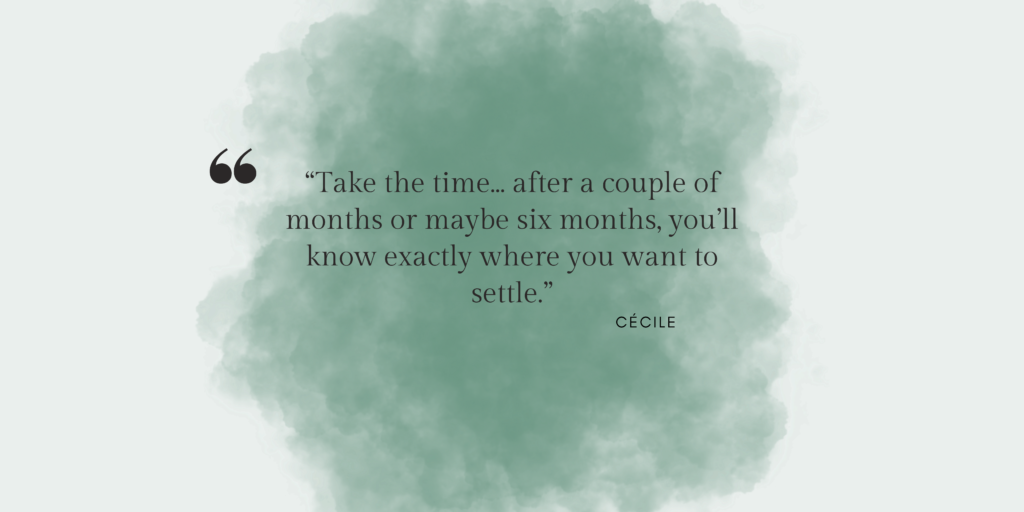
Stephen echoes this advice — even though he didn’t follow it himself.
“Come to France, visit, and scout where you’d like to live.”
France offers dramatically different lifestyles depending on the region:
- Paris — fast-paced and international
- Southwest — slower lifestyle and strong communities
- Côte d’Azur — beautiful but expensive
- Countryside — peaceful and affordable
Cécile highlights the Southwest as an underrated option:
“People are very friendly, very kind. The nature is stunning… it’s very international as well.”
Expat Tip #2: Prepare for French Administration
One of the most common expat challenges when relocating to France is navigating bureaucracy.
Cécile experienced this firsthand:
“I had not experienced France as an adult… everything was hard.”
From healthcare registration to banking and residency, paperwork takes time — something also emphasized in many relocation guides.
Expect to manage:
- Healthcare registration
- Residency permits
- Bank accounts
- Housing applications
- Driving license conversions
The key? Stay organized and patient.
Expat Tip #3: Finding Housing Can Be Difficult
Housing is another major challenge when relocating to France — particularly for newcomers.
Cécile notes:
“It’s already hard for the French to find a place to rent — so for foreigners it’s even harder.”
This is why many experts recommend:
- Starting with short-term rentals
- Avoiding buying immediately
- Exploring different regions first
- Prepare what we call the “dossier”: a list of documents will be required for rental
Cécile’s advice:
“You don’t need to buy your property straight away… explore and see if you’re ready to settle.”
Expat Tip #4: Community Is Essential
Both Stephen and Cécile emphasize that building a community and making new friends is one of the most important aspects of life in France.
Cécile explains:
“When Americans move here, they need a sense of community… it’s important to mix with locals and build connections.”
She also highlights how local events, markets, and shared experiences help newcomers integrate.
“People start knowing each other… communities are everything.”
Stephen agrees that integration takes time — but it’s worth it.
“Living outside your home culture takes adaptation… but you’re part of the 1% who dared to try.”
Expat Tip #5: Embrace a Slower Pace of Life
One of the biggest adjustments when relocating to France is adapting to a slower rhythm.
Cécile describes life in the Southwest
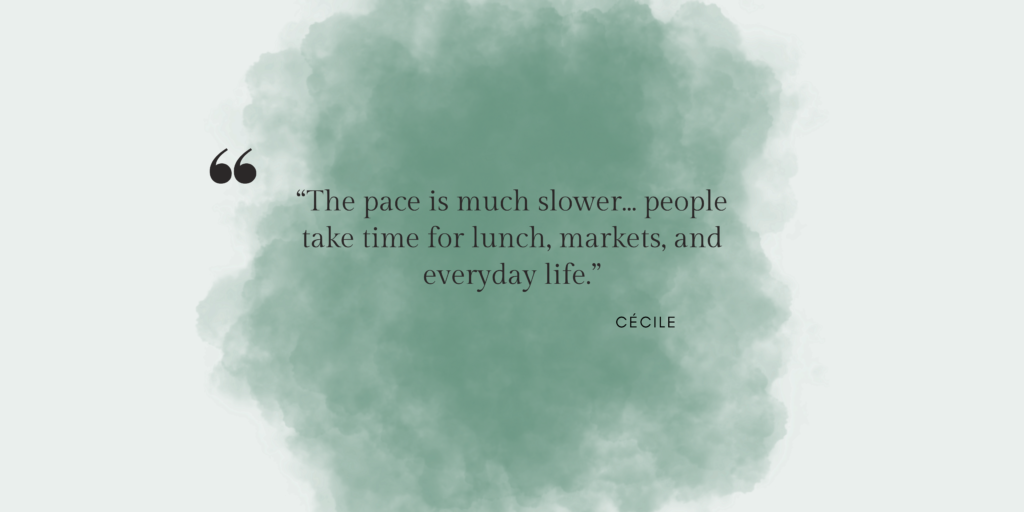
For many expats, this becomes one of the most rewarding aspects of living in France.
Stephen experienced this shift as well — eventually moving from Paris to a smaller town after the pandemic.
“If I’m going to be locked down, I want to be by a river next to a forest… now I’m in a new chapter of my French life.”
The Emotional Side of Relocating to France
Relocating to France isn’t just logistical, it’s emotional. Expats often overlook the emotional pressure of relocation.
Cécile reflects on the mindset required:
“Life is short… you really have to take every opportunity… even if you do things in fear.”
Stephen shares a similar philosophy:
“Don’t chalk it up as a failure… you tried living abroad — that’s already success.”
Both perspectives reinforce an important truth: moving abroad is a journey, not a perfect plan.
Final Thoughts: Is Relocating to France Right for You?
Relocating to France offers incredible opportunities:
- Slower lifestyle
- Strong culture and traditions
- Diverse regions
- High quality of life
But it also requires:
- Patience
- Flexibility
- Planning
- Openness to change
Whether you’re moving from abroad like Stephen or returning home like Cécile, life in France is rarely what you expect — but often more rewarding than you imagined.
As both expats demonstrate, relocating to France is not just about moving country — it’s about building a new chapter of life.