


When we talk about moving abroad, most people picture the adventure: a new city, food, the excitement of starting fresh. But behind every passport stamp is a quiet truth every expat knows too well: we all carry emotional baggage with us, and with each move, our identity shifts in ways we rarely expect.
In my conversation with Tracey, a relocation coach, somatic practitioner, and six-time expat, we explored what really happens underneath the logistics of relocation. And what she shared resonated deeply with every expat who has ever stepped into the unknown.
Because the truth is: moving abroad doesn’t erase anything. It magnifies what’s already inside.
The Moment Your Identity Starts to Shift
Tracey left home at sixteen, catching a 29-hour train from a small town in Northeast China to Shanghai. She didn’t know anyone. She didn’t have a safety net. What she did have was resilience, the quiet kind you only discover when you’re forced to build yourself from scratch.
Fast forward through six global moves, a divorce, career changes, financial loss, and a cross-continental leap to Canada… and Tracey realized something most expats learn the hard way:
Relocation can’t fix an internal problem. It simply removes distractions until you’re finally forced to face it.
When she arrived in Vancouver, the honeymoon phase faded with the summer. Winter cracked her open. All the emotions she had neatly packed away in Hong Kong, pain, grief, confusion rose to the surface.
This is the identity shift no one warns you about.
The shedding. The unraveling.
The feeling of being suspended between who you were and who you’re becoming.
Tracey spent four years in that in-between space. And if you’ve been there too, you know exactly what that feels like.
The Hidden Emotional Baggage Expat Life Brings
We often pack our bags with things we believe will help us settle; a favorite sweater, a cookbook, the mug we refuse to leave behind. But what about the emotional baggage? That comes with us whether we like it or not, we can’t just run away from it, despite what some of us try to do by moving abroad. Tracey put words to something many expats feel but never articulate:
We grieve things we can’t even name.
She introduced a term that hit me like a wave: ambiguous grief, the invisible losses that come with relocation.
The loss of belonging.
The loss of identity.
The version of you that fit perfectly somewhere else.
And suddenly, all the tears, the late-night doubt, the strange ache in your chest in a new city… they make sense.
Why Feeling “Stuck” Might Actually Be a Good Sign
At some point, most expats hit the wall.
That moment where you wonder:
“Why am I not connecting here?”
“Why do I still feel like I’m floating?”
“Why do I miss everything and nothing at the same time?”
Tracey calls this the in-between space.
Not anchored to the past, not yet rooted in the present.
It feels uncomfortable, messy, and deeply frustrating, but it’s also life’s way of slowing you down so you can grow.
Because real identity shifts aren’t cognitive, they’re embodied. You can intellectually know who you want to become, but if your body is still carrying emotional baggage from old chapters, it will pull you back every time.
And this is where Tracey’s somatic work comes in.
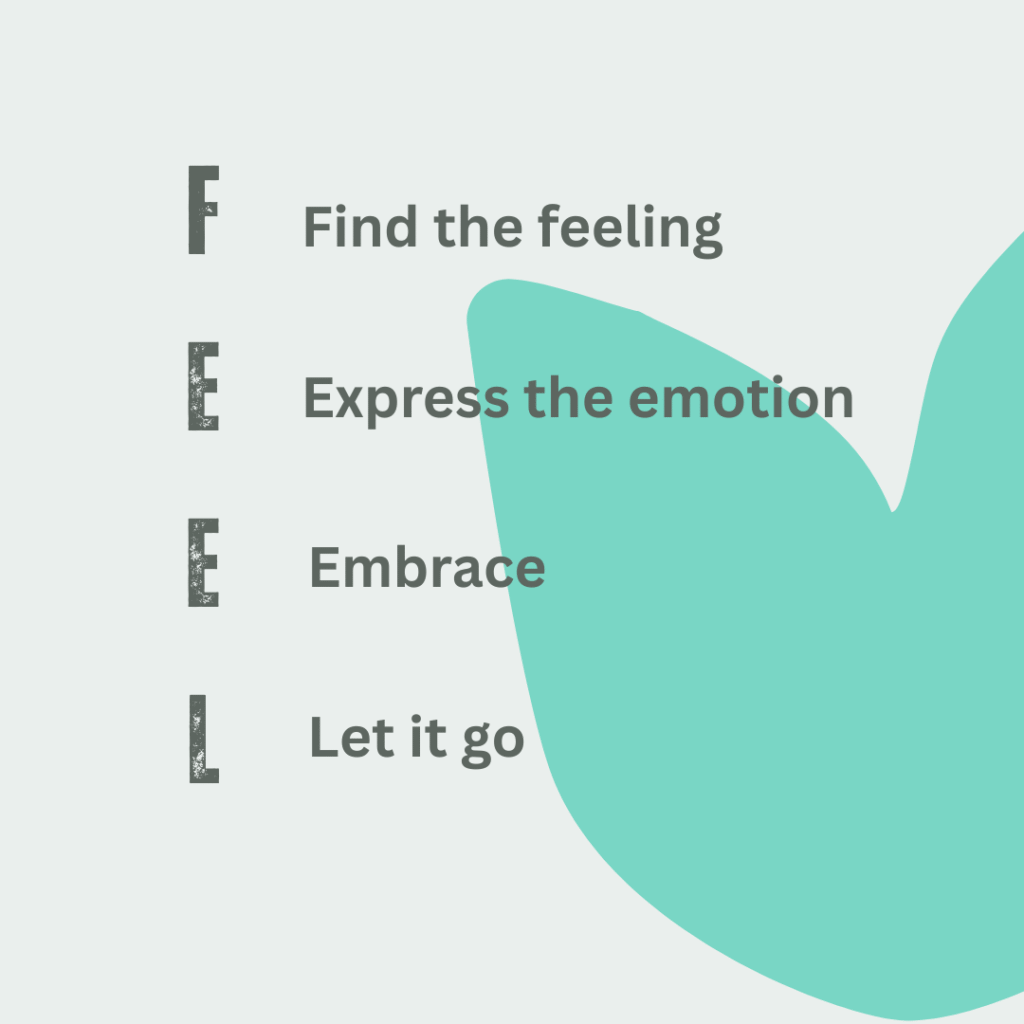
The FEEL Framework: A Way to Process Expat Emotional Baggage
Instead of telling someone to “just feel the feelings,” Tracey breaks it down into something clear, accessible, and deeply human.
Her FEEL framework is a practical tool to help expats move through emotional turbulence with compassion and presence.
F — Find the Feeling
Pause and notice the physical sensation.
Is it a tight chest? A heavy stomach? A buzzing anxiety?
Emotions speak through the body first.
E — Express
Name it.
Is it loneliness? Fear? Ambiguous grief?
Putting a word to your inner landscape softens it instantly.
E — Embrace
Instead of pushing it away, allow the emotion to exist.
This is the hardest part—and the most healing.
You don’t need to love it. Just stop fighting it.
L — Let It Move
Emotion is energy. And energy moves through:
breath, sound, or movement.
Shake, cry, sigh, dance, breathe deeply.
Let your body do what it already knows how to do.
This is how emotional baggage stops being baggage.
Learning to Build Home Within Yourself
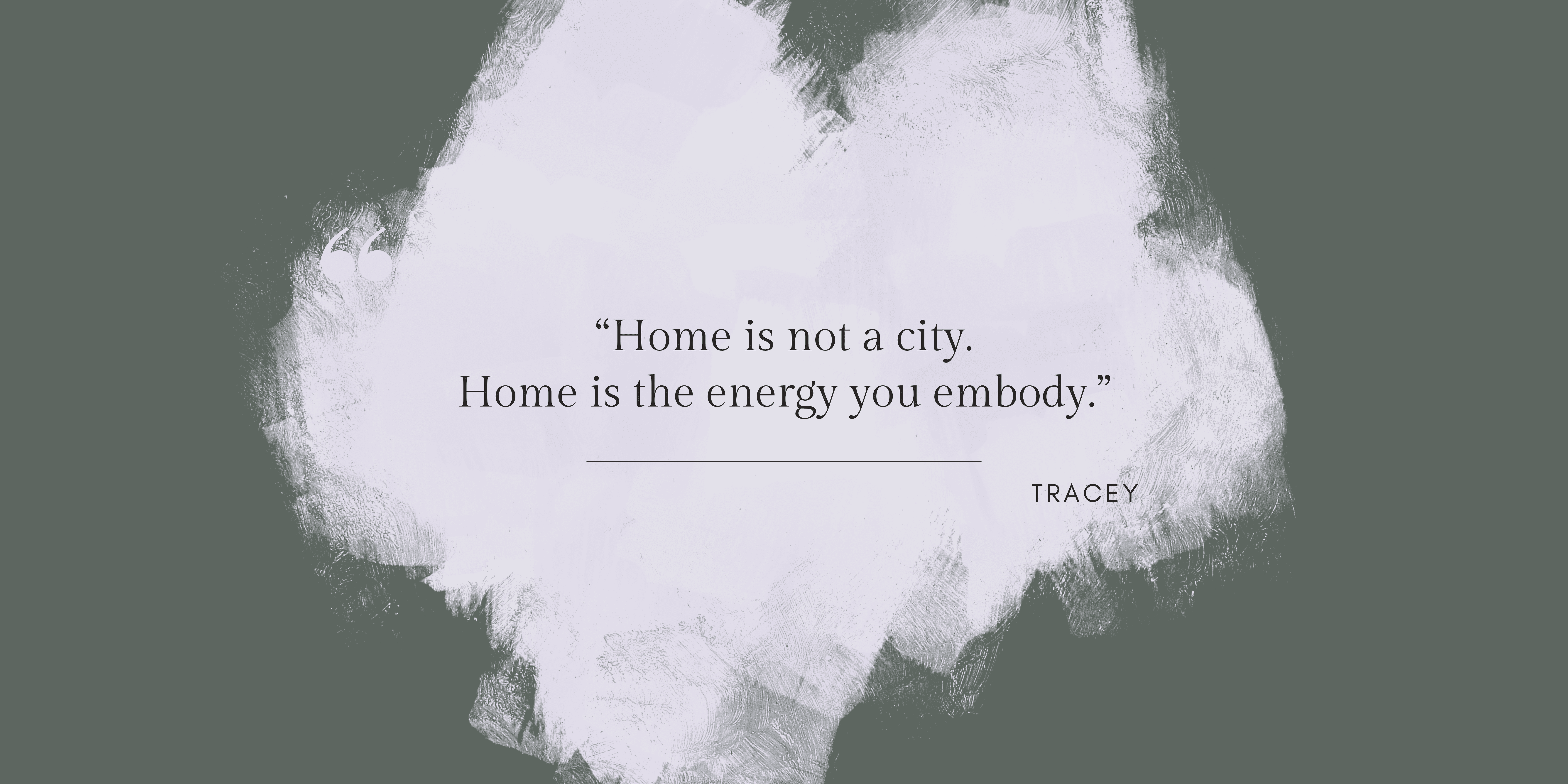
As Tracey continued her expat journey from Vancouver, to Toronto, to New York, she realized something profound: Home is not a city.
Home is the energy you embody.
It’s the peace you cultivate.
The relationships you nurture.
The version of yourself you’re brave enough to meet.
And once you build that inner home, you can live anywhere.
You stop moving to escape, you move to expand.
Why Expats Are Constantly Becoming
The beauty of expat life is that it forces us to reinvent ourselves over and over again. Each move strips away another layer of the conditioned self, the version shaped by family expectations, cultural norms, and social pressure.
And what’s left is the true self: intuitive, grounded, curious, and deeply alive.
We don’t move abroad to become someone new.
We move abroad to finally meet who we’ve always been.
The best expat tip you can apply is to let go of what is no longer serving you in your previous home and embrace the new changes within you.
If You’re in the Middle of an Identity Shift… You’re Not Alone
Whether you’re just landing in a new city or questioning your place in one you’ve lived in for years, know this:
Your emotional baggage does not mean you’re failing.
Your identity shift is not a crisis.
It’s an awakening.
You are building a home within yourself, slowly, quietly, beautifully.
And that is the real expat journey. Follow for more expat tips!
Leave a Reply